
Hiroko Ohno:
Event Horizon
On view October 15 – November 15, 2026
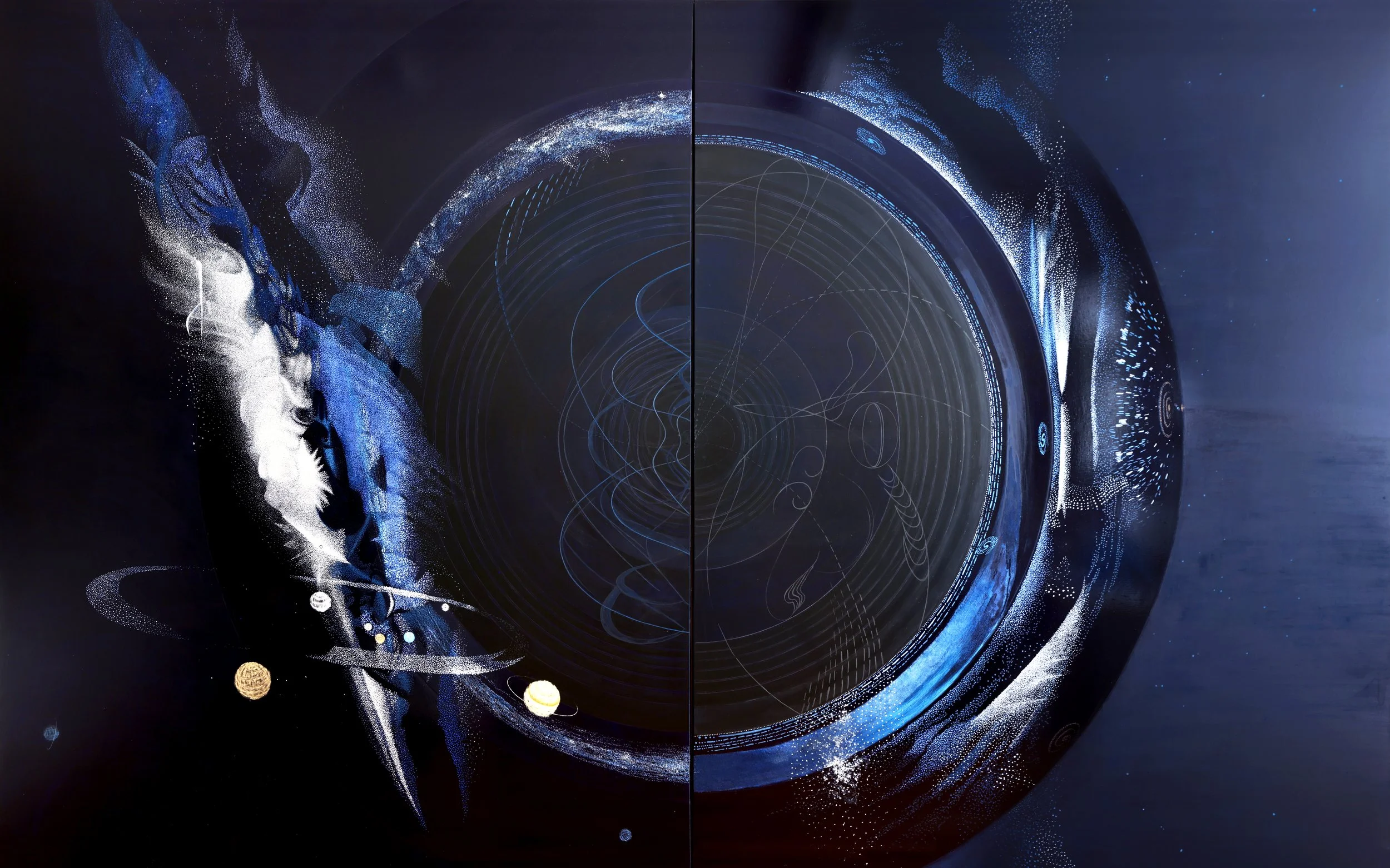
Galaxy: Event Horizon, 2018–2021 (diptych). Mineral pigments (lapis lazuli, azurite), seashells, mica, coral, salt, acrylic on linen. 96 × 152 inches.
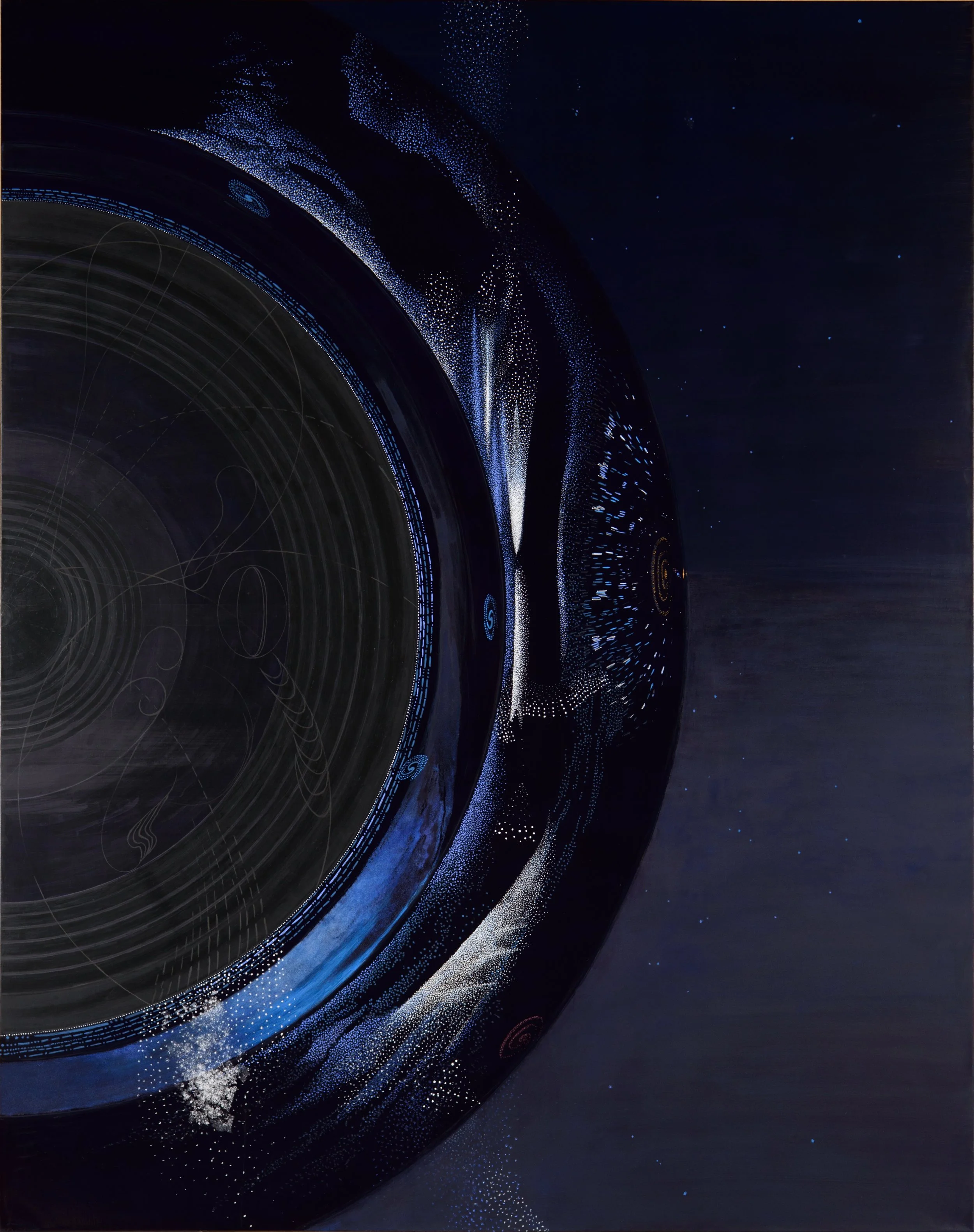
Galaxy: Event Horizon, right canvas, 2018 mineral pigment, lapis lazuli, azurite, seashells, coral, mica, acrylic, and salt on linen, 96 × 76 in
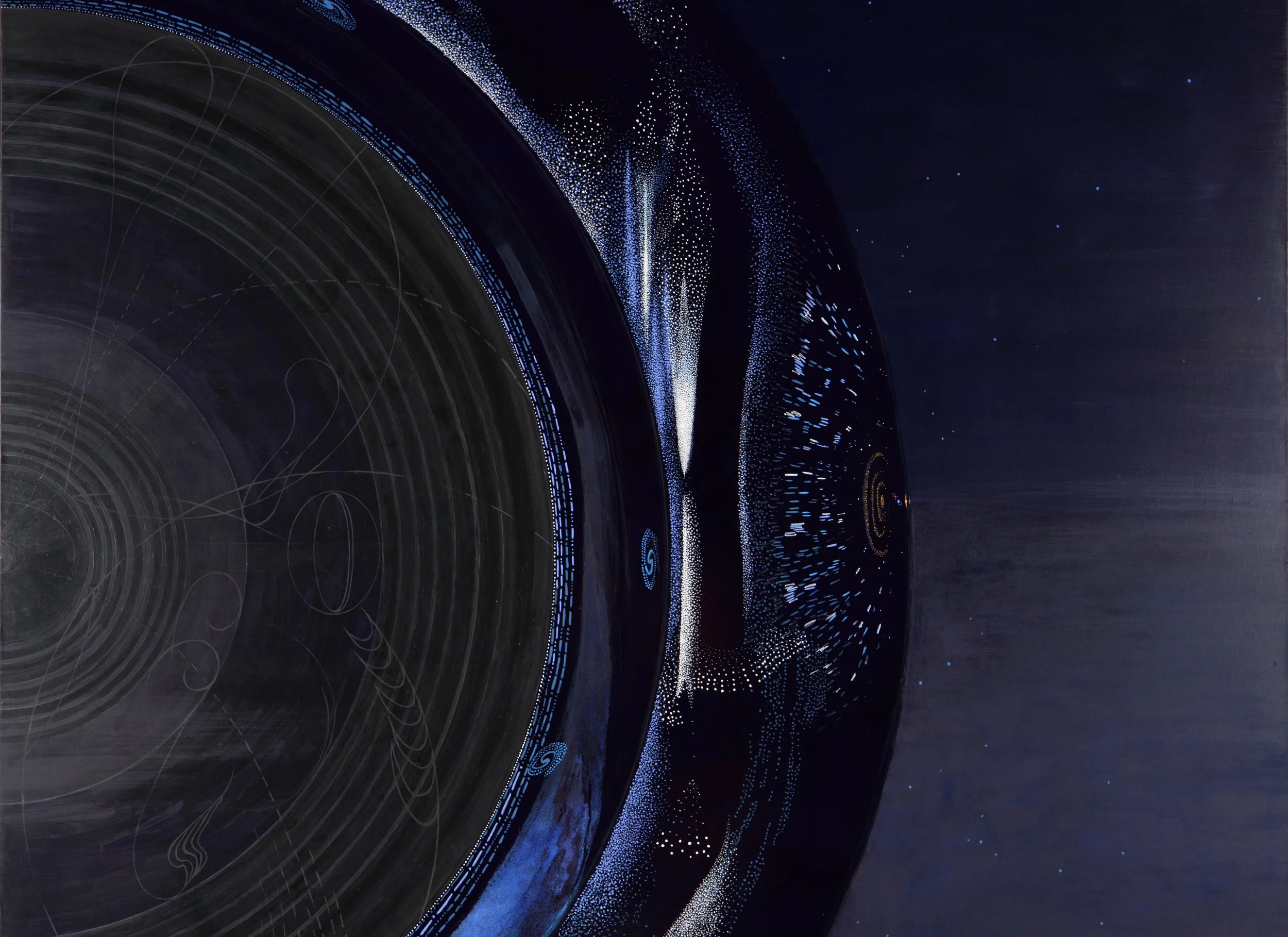
Detail, Galaxy: Event Horizon, 2018
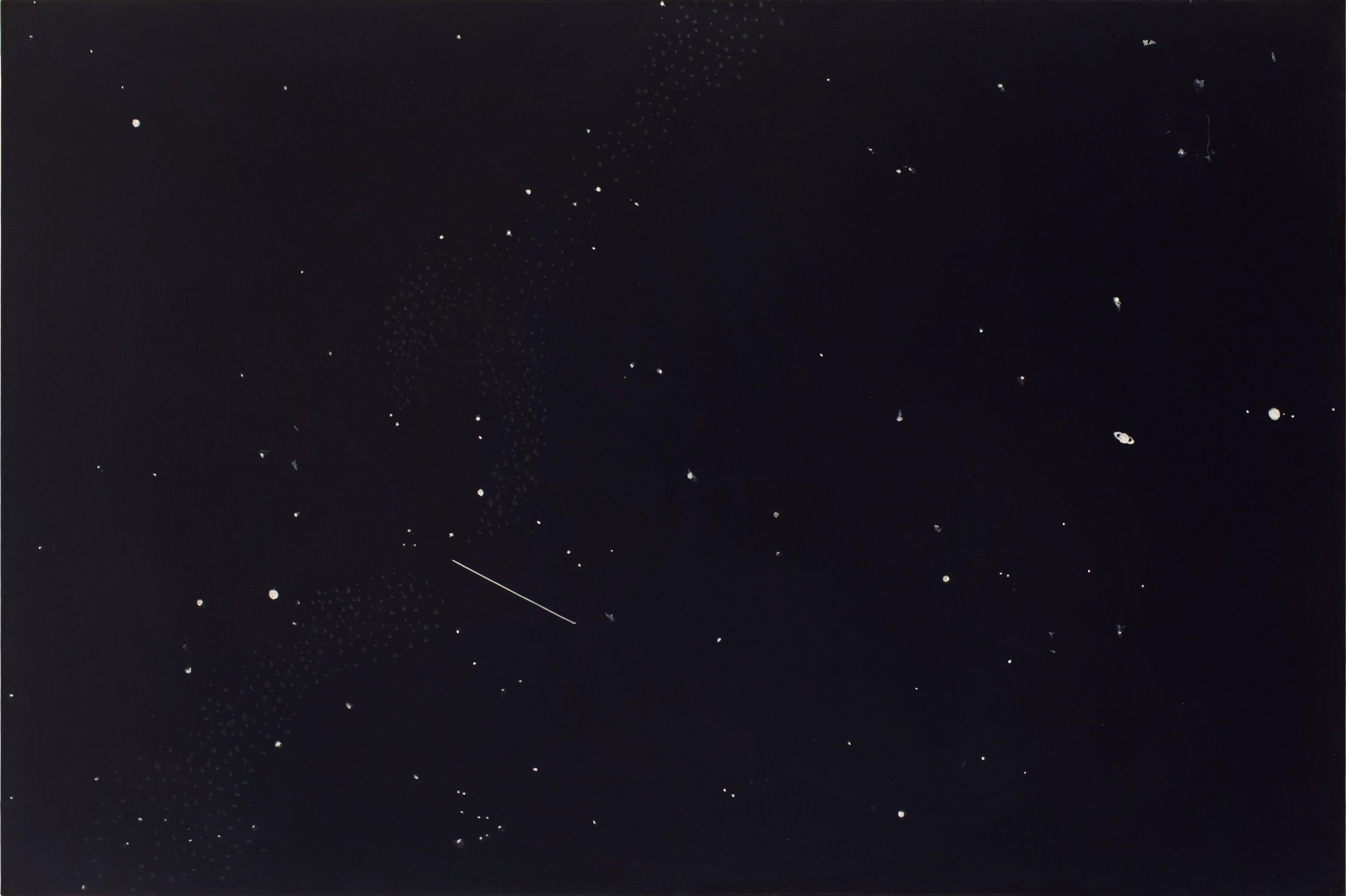
The Perseids in Geneva, August 2020, 2020 mineral pigment, seashell, and acrylic on linen, 24 × 36 in
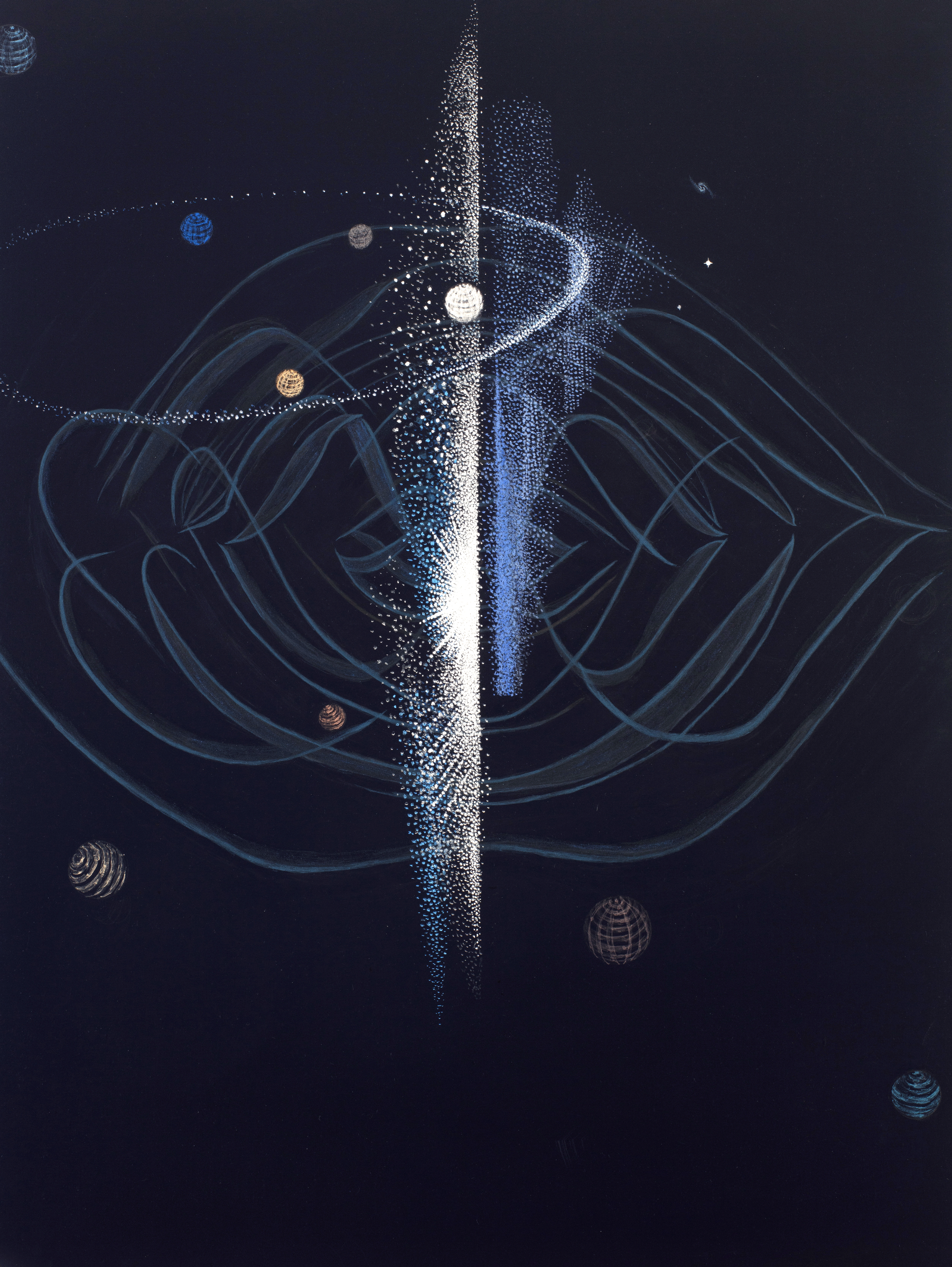
Galaxy: Event Horizon III, 2023 mineral pigment, lapis lazuli, azurite, seashells, coral, mica, acrylic, and salt on linen, 40 × 30 in
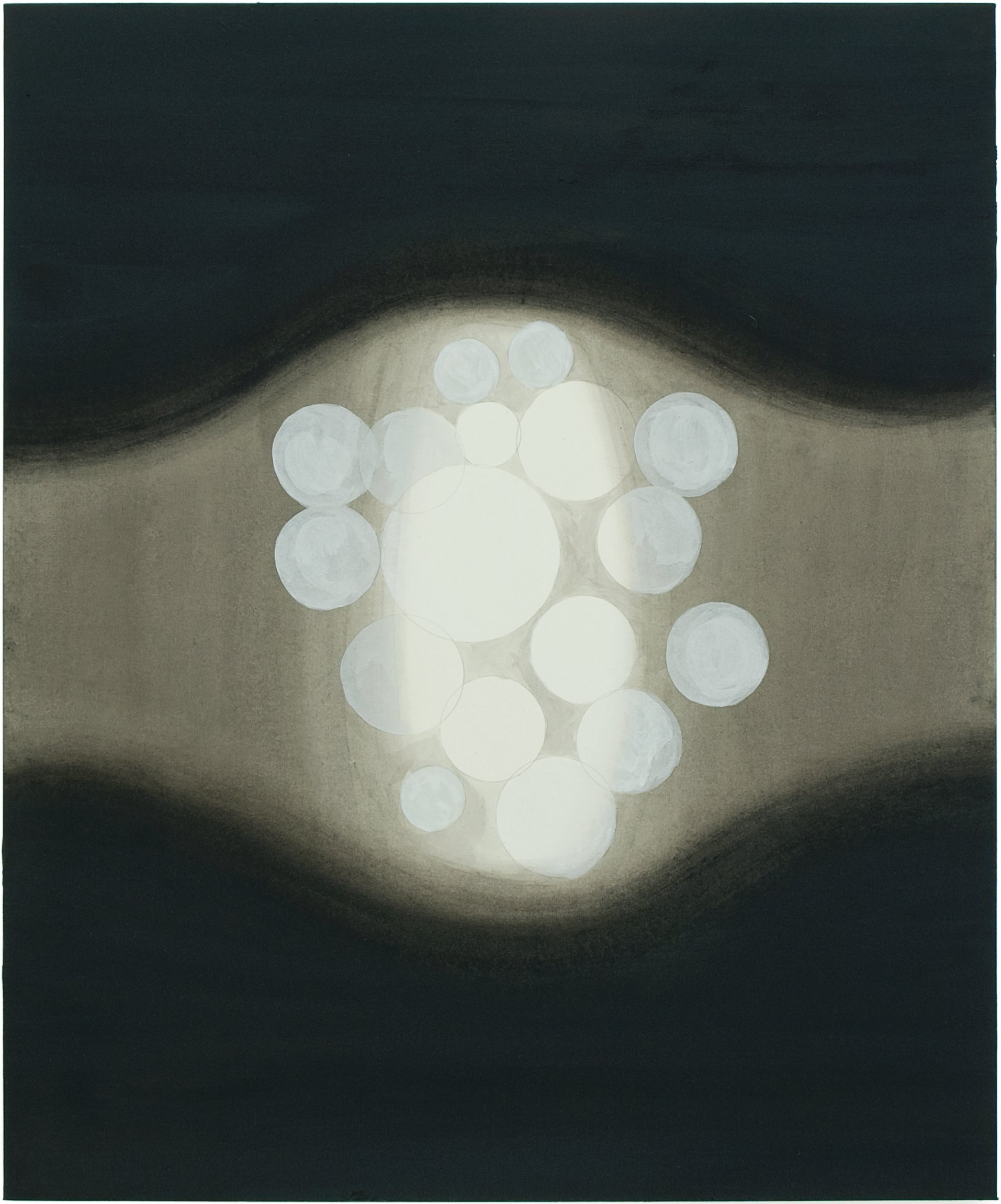
Galaxy Around Us, 2010 pigment, old ink, and acrylic on paper, 29 × 24 in
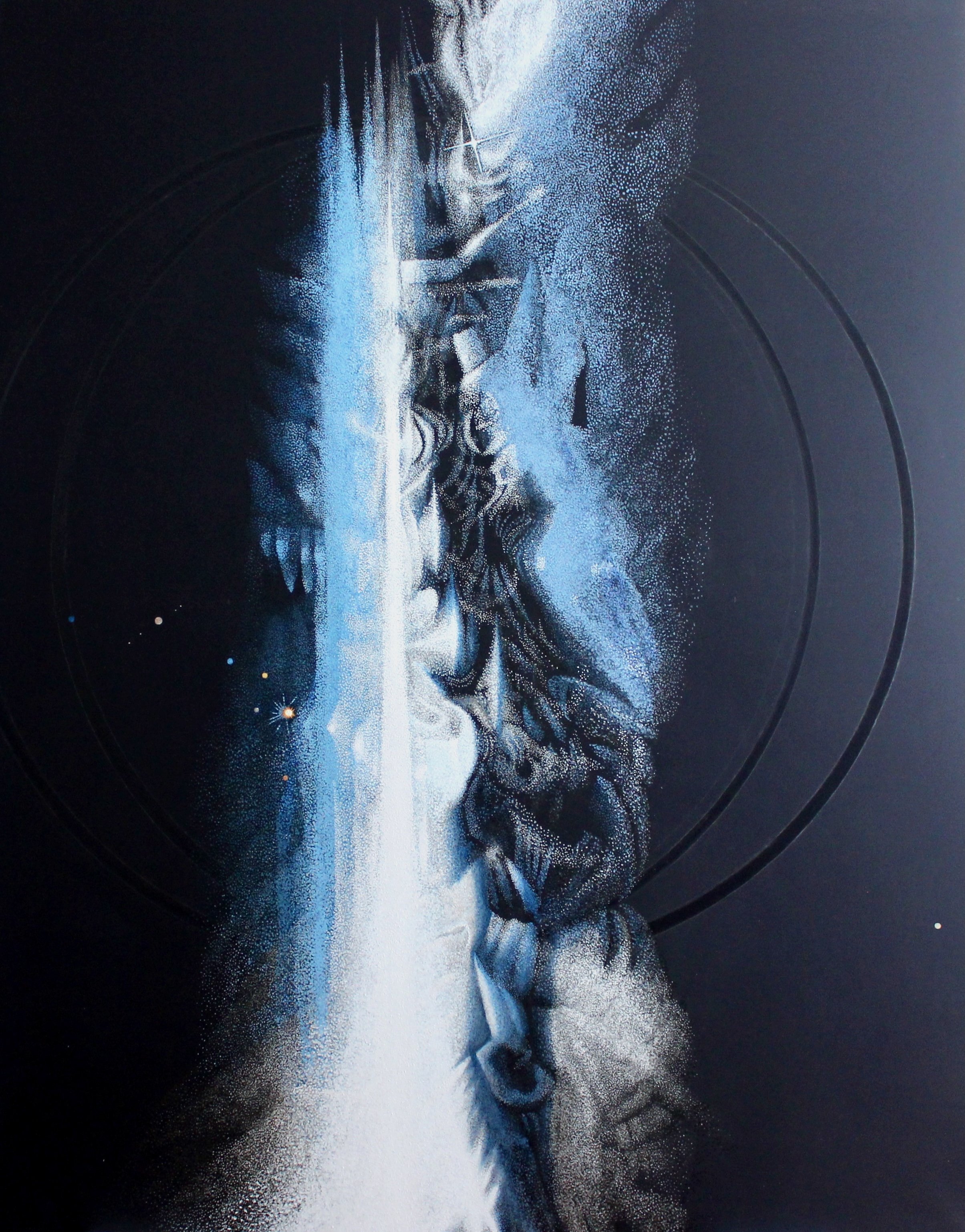
Milky Way, 2025 mineral pigment, seashells, coral, mica, acrylic, and salt on linen, 96 × 76
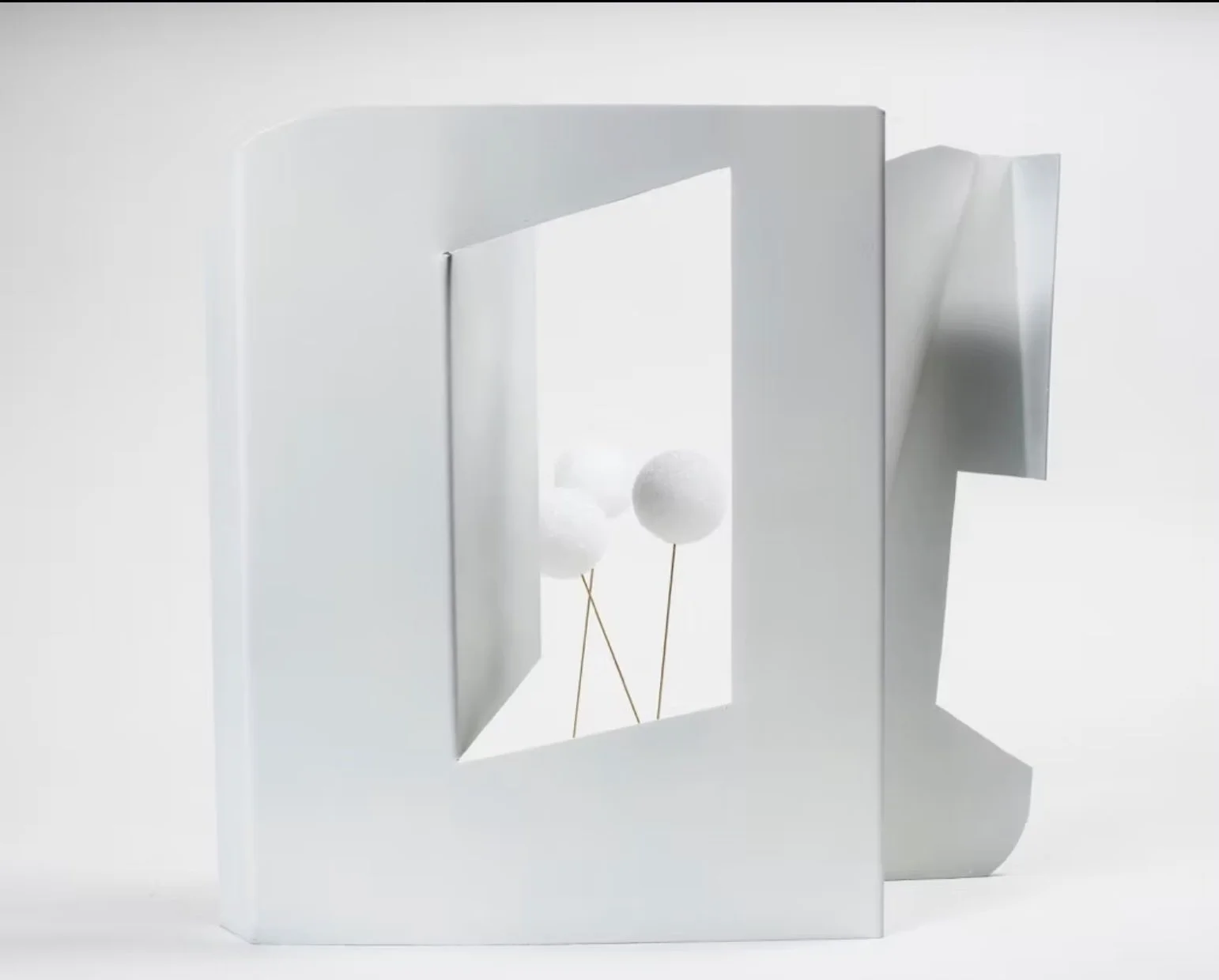
Untitled, 2016, steel, paint, Styrofoam ball, and metal shapes, 17 W × 15 H × 15 D in
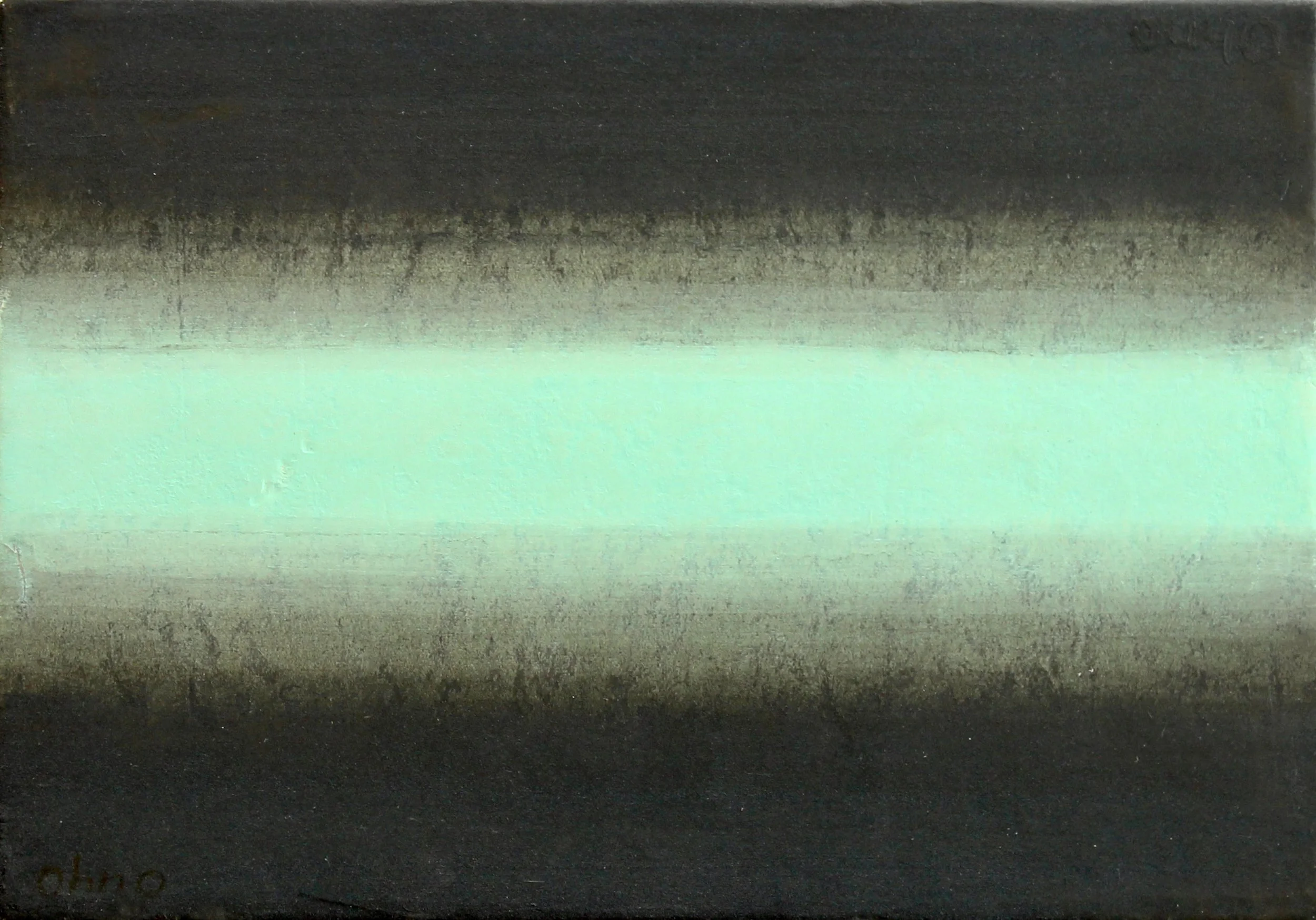
Rays II, 2009, mineral pigment, old ink on paper, 6in x 9in
Friday, October 16, 2026, from 6 p.m. – 8 p.m.
Amos Eno Gallery is pleased to present Event Horizon, a solo exhibition of new paintings and sculptural elements by Japanese artist Hiroko Ohno. The work on view explores the invisible structures that connect cosmic formation, geological time, and human experience.
Humanity has entered a new era of seeing the universe. Recent advances in astronomy — including the Event Horizon Telescope (EHT) project, which produced the first images of a black hole — have revealed phenomena once thought impossible to observe. Rather than illustrating these scientific discoveries, Hiroko Ohno's Event Horizon responds to the questions they provoke, presenting paintings and sculptural elements that explore the invisible structures connecting cosmic formation, geological time, and human experience. Through painting and subtle spatial interventions, the exhibition invites viewers into a space where visible forms continually suggest deeper layers of matter, energy, and time.
This exhibition builds on an inquiry that has shaped Ohno's practice for more than three decades. Her fascination with the universe began not through scientific research but through direct experience: witnessing the setting sun and rising moon simultaneously across the horizon in Mongolia's Gobi Desert profoundly altered her perception of Earth as a planet suspended in space. During her first visit to New York, she met Minimalist artist Tadaaki Kuwayama, whose rigorous pursuit of reduction and spatial clarity encouraged her to further refine her own visual language. Since then, Ohno has developed an ongoing dialogue with astronomy, geology, and cosmology — not to explain scientific knowledge, but to explore enduring questions of existence, time, gravity, and humanity's place within a vastly larger continuum.
At the center of the exhibition is Galaxy: Event Horizon, a monumental two-canvas painting measuring 96 by 152 inches. Inspired by the Event Horizon Telescope project and its attempt to produce the first image of a black hole, the work developed from Ohno's long-standing investigations of gravity, spacetime, astronomical distance, and the relationship between the visible and invisible. Within its semicircular structure, astronomical distances are translated into proportional intervals, while curved lines evoke gravitational waves and the distortion of spacetime. Rather than illustrating scientific phenomena, the painting constructs a pictorial space in which different scales, forces, distances, and dimensions coexist.
Material itself is central to that investigation. Ohno works with traditional Japanese mineral pigments formed over millions and billions of years within the Earth. Some materials, including platinum, predate the formation of our planet, allowing the works to embody — not merely depict — deep geological and cosmic time. The paintings themselves reveal multiple temporal layers, with dark blue surfaces often concealing luminous fields of red beneath them, suggesting that every visible surface contains unseen histories and processes extending beyond immediate perception.
Drawn by questions raised through the Event Horizon Telescope project, Ohno traveled to Chile's Atacama Desert, where she visited the ALMA Observatory and painted the Milky Way beneath one of the darkest night skies on Earth. These firsthand observations became integral to the development of Galaxy: Event Horizon and reflect her commitment to direct experience in an increasingly mediated world.
By bringing together materials that embody billions of years of planetary and cosmic history with works shaped by direct observation and contemporary scientific discovery, Event Horizon creates a space where art and science meet through wonder rather than explanation. At a moment when astronomy continues to expand the limits of human perception, Ohno's work invites viewers to look beyond the visible world and to imagine their place within the universe. Seen from a cosmic perspective, humanity is no more than a tiny speck of dust. In the Anthropocene, her work encourages us to reconsider the value of all forms of existence — not only human life, but also animals, plants, rocks, fire, and the materials that have shared Earth's history for billions of years.
View all works in the exhibition on Artsy.net.
About the Artist
Hiroko Ohno is a Brooklyn-based artist originally from Tokyo whose work explores the relationship between the universe, gravity, and human perception. Her paintings are philosophical inquiries into why the world exists as it does — connecting cosmic phenomena such as black holes, space, and time with the sensory experience of being human.
Born in Tokyo, Ohno holds a BFA and MFA from Musashino Art University. She has exhibited nationally and internationally, including solo exhibitions at Sanagi Fine Arts (Tokyo); Radio House Gallery (NY); Desbrosses Gallery (NY); Homma Museum (Yamagata); and Takashimaya Gallery (Tokyo). Her work is held in collections at: University of Tokyo; Keio University; Hiratsuka Museum of Art; Homma Museum; CUNY QCC Art Gallery; Lyman Allyn Museum. Publications include Collected Works of Hiroko Ohno (Kyuryudo Art Publishing) and Midori Yamamura’s essay in Women across Asian Art: Selected Essays in Art and Material Culture. Ohno received an Artist Grant for the Vermont Studio Center Residency Program and was selected for the LMCC/Creative Capital Artist Summer Institute and the NYFA Immigrant Artist Mentoring Program.
About Amos Eno Gallery
Amos Eno Gallery has been a fixture in the New York art scene since 1974 when it opened in Soho. The nonprofit space is run by a community of professional artists from New York City and across the country, along with a part-time director. During this exhibition, the gallery will be open Wednesdays through Sundays from noon to 6 p.m. and
Amos Eno Gallery's programs are made possible by the New York State Council on the Arts with the support of the Office of the Governor and the New York State Legislature.
Amos Eno Gallery is also funded in part thanks to the generosity of the Joseph Roberts Foundation.